If your cat has chronic vomiting, diarrhea, or a sensitive stomach that just won’t get better, there is hope and there is help.
These symptoms are commonly associated with inflammatory bowel disease (IBD), irritable bowel syndrome (IBS), and colitis—even if your cat hasn't been formally diagnosed. If you've already tried different foods, medications, or supplements without lasting success, you're not alone. At Ask Ariel, we specialize in helping cats find lasting relief from digestive issues. Our veterinarian-recommended natural IBD Kit was specially formulated to help firm loose stool, reduce chronic vomiting, calm digestive inflammation and help restore healthy digestion so your cat can feel better. Trusted by pet owners and veterinarians since 2005, Ask Ariel has helped thousands of cats with chronic digestive disorders live happier, healthier lives.
"Our cat Tipper had feline IBD Inflammatory Bowel Disease and while we tried many different foods, supplements and medications, he still did not have a formed stool. About a month using the IBD Kit and diet suggested by Ask Ariel, Tipper started having normal bowel movements and has been normal ever since. My husband and I want to thank you and the staff at Ask Ariel Your Pet Nutritionist very much for your advice and your products which have worked, what we consider to be a miracle in the life of our cat. I can imagine you are also very gratified when people like us let you know how your efforts to help us have resulted in a life for us and our cat."
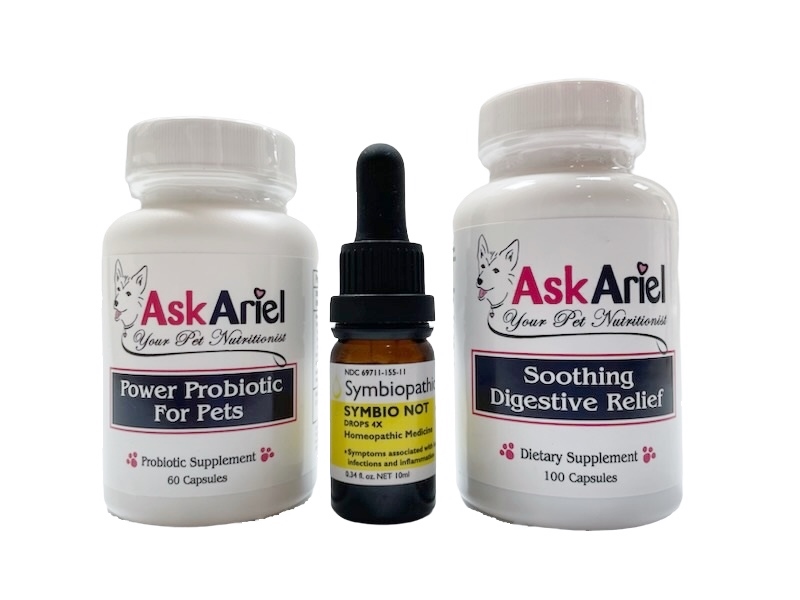
Our signature 3-product IBD Kit has been specially formulated to calm the digestive tract, firm up stool, reduce vomiting, gas, mucus and bloody stool.
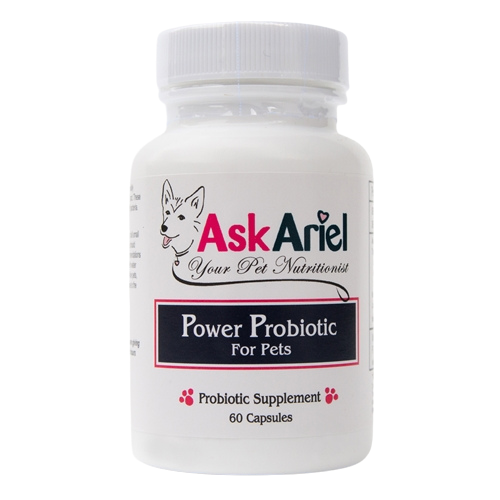
Power Probiotic – Triple-action probiotic with prebiotics, spores and beneficial bacteria to support healthy digestion.
NOT Drops – Targets harmful bacteria to reduce inflammation and rebalance the microbiome.
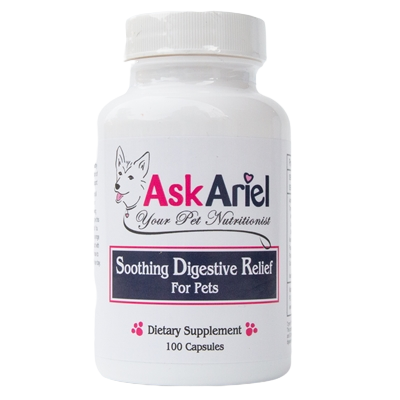
Soothing Digestive Relief – Gently calms and soothes the digestive tract to reduce discomfort, gas, and irritation.
Excellent Value! Save over 15% with the IBD Kit, plus FREE shipping with code ibd at checkout.
Feline IBD and IBS are chronic digestive conditions that cause ongoing inflammation in the intestinal tract. This inflammation can interfere with normal digestion and lead to symptoms like vomiting, diarrhea, gas, bloating, and weight loss. Some cats may have a firm or sensitive abdomen, frequent stomach noises, or appear hunched due to discomfort.
Many cats seem perfectly fine for years—often eating the same food their entire life—then suddenly begin showing symptoms as they get older. Even without obvious digestive issues early on, inflammation can develop slowly over time and eventually become more serious.
Over time, chronic inflammation can increase the risk of intestinal lymphoma, particularly in older cats.
"My cat Burrito, 14 years old, started vomiting hairballs occasionally. Then it got so frequent, we had to seclude Burrito to the basement every night. She had always slept between my husband and myself. Poor kitty! Well most of the time she would vomit undigested food during the day and then early in the morning, it was a white foam liquid. So we took her to the vet and they thought she could have acid reflex, so we put her on a medication twice a day. She didn't like that at all and it didn't work--she still vomited the same. When we took her back to the vet, the vet said it could be IBD and wanted to put her on another drug to see if the inflammation that was causing the vomiting would go away. NO NO NO! I didn't want to do that. So I did some research and found Ask Ariel. I ordered the Feline IBD Kit combo of Probiotic, Soothing Digestive Enzymes and the NOT drops and waited for results. Wow it really worked! Thanks, Ariel!"
If your kitty has IBD or IBS, you may notice symptoms that vary in severity and frequency. The symptoms your cat has will depend on which part of the GI tract is affected. Other factors such as diet and stress can play a huge role in how and when symptoms appear. Common signs of feline IBD and IBS include:
Chronic diarrhea (may contain mucous and blood)
Weight loss
Vomiting (may contain hairballs)
Cat lethargic or not eating
Gas
Stomach gurgling noises
Blood and/or mucous in the stool
Chronic inflammation in a cat's intestinal tract can be caused by one or many things. The biggest contributors to IBD are diet, microbiome, environment and genetics.
Diet - Cats with IBD have very sensitive digestion and may have allergies or intolerances to common ingredients in commercial pet foods. One of the goals of cat IBD treatment is to use natural supplements along with diet changes to reduce inflammation throughout the GI tract. Grains and certain meat proteins can be allergens for cats. Many cats with IBD are prescribed special veterinary diets, but most of these contain chemicals, fillers and grains and are high in carbohydrates, which can cause indigestion. Cats are carnivores and they were designed to eat meat - not corn, wheat, gluten, or rice. There is not one "perfect" diet that works for every cat with IBD, but most respond well to a hypoallergenic, easily-digestible diet.
Microbiome - A healthy, balanced microbiome supports the immune system, fights pathogens, and maintains digestive health. Clinical studies have shown the presence of dysbiosis in feline inflammatory bowel disease (IBD).* Dysbiosis occurs when the balance between the good and bad bacteria in the gut microbiome is out of alignment. Cats with IBD often have a high population of bad bacteria (pathogens that can cause sickness and disease) in contrast to an insufficient amount of the healthy bacteria that aid in digestion. When your cat's microbiome is out of alignment, dysbiosis can cause all types of digestive upset, including vomiting, acid reflux, diarrhea and loose stool. Probiotics are essential to rebalance the microbiome of cats that have been treated with antibiotics and/or steroid medications. These medications can cause an imbalance in intestinal flora (microbiome) by killing off the good "friendly bacteria" along with the bad bacteria. *Reference: Anim Health Res Rev, 2012 Jun;13(1):64-77. Feline gastrointestinal microbiota. Minamoto Y, Hooda S, Swanson KS, Suchodolski JS.
Stress - Stress is a huge trigger for IBS & IBD in cats. Cats like peace and quiet. Loud noises, such as a vacuum or children playing, can disrupt them and cause stress. Like people, cats can have physical reactions to stress that may include diarrhea and digestive upset. Long term stress and anxiety can lead to chronic inflammation in the intestinal tract or IBD.
Genetics - The makeup of your kitty's immune system is also thought to play a role in feline IBD. The majority of your cat's immune system resides in its digestive tract. The immune system has a natural mucosal barrier throughout the GI tract to prevent harmful bacteria from causing inflammation. If the barrier becomes weak, pathogens can cross into the tissue and cause inflammation and infection. Siamese and other oriental breeds are more predisposed to developing IBD.* Reference: J Am Vet Med Assoc, 1992;200(11):1712-1718. Lymphocytic/plasmocytic gastroenteritis in cats: 14 cases (1985-1990). Dennis JS, Kruger JM, Mullaney TP.
"My girls, Siamese cats Fanny and Clara, have had serious gastric issues from time to time. They are 8 year old sisters who were abandoned in a closed box one August on the front step of my vet’s office in Savannah, GA...two months after my previous beloved Siamese had passed away. Fanny spent 4 days at Cornell Animal Hospital 2 years ago, and Clara gave me a big scare a couple months ago. I give them Power Probiotic regularly, and when the “output” starts to get too loose, a sprinkle of Soothing Digestive Relief sets them right."
Colitis is a type of inflammatory bowel disease in cats. With cat colitis, the GI inflammation is located in the colon or large intestine. It can be an acute or chronic condition. Chronic colitis can cause weight loss and other uncomfortable symptoms associated with IBD.
The acute form of colitis is usually caused by stress. Stress colitis in cats can cause diarrhea and bloody stools that may appear pink, red or tarry, depending on the degree of ulceration inside the colon. How to treat colitis in cats naturally will include learning how to keep your cat calm and managing stress and anxiety, as these can help to decrease colitis flare-ups.
Colitis in kittens is fairly common. Kittens do not have a fully developed digestive or immune system and are much more sensitive to stress, parasites (hookworms, roundworms, giardia), food allergens and infections. If your kitty has colitis or bloody stools, it is important to see a veterinarian to make sure they do not have any parasites.
"I just want to thank you for your products, I purchased the IBD Kit for my cat Lucky. He was having issues with vomiting. He had trouble holding food down even though he was hungry. My vet tested for feline viruses, performed a biopsy of the spleen & administered steroid injections and medication for vomiting, but the treatment lasted for shorter periods of time. He was losing weight & was fading before my eyes. I prefer more natural treatments, so I stopped the vet visits, to try something else more natural. What did we have to lose at this point? I received the IBD Kit and administered the supplements & he immediately began to eat. At first it was occasional vomiting & I was still feeding the prescribed veterinary diet from my vet. We were making progress, but he was still sick. I decided to forgo that food & try the diet tips that came with my order. He ate it immediately & began to slowly increase his food intake, slowly gaining back some weight. I periodically gave him the supplements when he had a minor relapse. Today he is eating regularly & is keeping it down. Thank you for your products. It means so much that our cat is having a much more normal life, even if we have to live with his IBD."
Supplements like digestive enzymes, probiotics and organic hemp extract can reduce inflammation, firm up stool, relieve symptoms and improve your cat's overall wellbeing. Our home remedies can be used in conjunction with treatments prescribed by your veterinarian. Feeding a hypoallergenic, anti-inflammatory diet along with our natural treatment for cat IBD and IBS can be life-changing for your cat and for you!
IBD Kit - The cat IBD treatment kit includes three natural remedies for cat digestion specially designed to calm and soothe the digestive tract, firm up stool, relieve tummy rumbling and reduce gas, mucus and bloody stool.
Power Probiotic - It is important to use a multi-strain, powerful probiotic that has been used extensively with cats that have IBD. Our Power Probiotic is easy to administer, very effective and well tolerated by cats. The product has been third-party tested and guaranteed to contain the amounts of friendly bacteria indicated on the label. Pure and natural, Power Probiotic is the best probiotic for cats with IBD and IBS.
Soothing Digestive Relief - This leading herbal enzyme supplement breaks down nutrients, calms the stomach, firms up stool and helps increase absorption. This digestive enzymes supplement for cats with IBD helps to relieve the diarrhea, vomiting, gas, gurgling noises and discomfort associated with IBD and IBS.
Happy Paws Organic Hemp Extract - Has a calming, soothing effect making it an ideal cat irritable bowel treatment. Stress is a trigger for diarrhea and digestive problems. Many pets that have IBD and digestive issues also have anxiety. Happy Paws Drops help to calm nervous pets and relieve pain and intestinal cramping.
"Just wanted to send a big thank you and share how you’ve made my little Daisy feel better! She's pictured with her tuxedo sister, Violet. Daisy has early IBD and I have her on a good diet and have been religiously giving her NOT Drops and have seen a change in her - I believe it is working. I am so thankful for your products and descriptions. Also, when I receive my order (which is always so quick), I receive a handwritten message for my cat. I truly can’t express that gesture - just unbelievably kind and makes your business a 10 star! It sure goes a long way to provide such a great service and kindness. Your company is absolutely the best, and thank you again so much."
Cats with colitis, IBS, or IBD often have sensitive digestive systems that require a diet closely aligned with their natural carnivorous needs. Unlike dogs, who can tolerate a more varied diet, cats thrive on a diet rich in animal proteins and fats with minimal carbohydrates. Unfortunately, many commercial cat foods are packed with starchy fillers like legumes, rice, and wheat gluten, which are used to keep costs down but can be difficult for cats to digest. For cats with sensitive digestive tracts, these fillers can lead to inflammation, bloating, and exacerbation of symptoms associated with colitis, IBS, and IBD.
A species-appropriate diet that mimics what a cat would eat in the wild is often the best approach. Raw frozen diets using a novel protein work well for cats with bowel disease as they typically contain real meat, organs and vegetables. Moreover, raw diets often include essential components like fish oil, which is rich in omega-3 fatty acids that have anti-inflammatory properties, helping to soothe and heal the gastrointestinal tract.
For cats with IBD, IBS & Colitis, it's important to select novel or less common protein sources, such as rabbit, duck, or venison, which are less likely to trigger an allergic reaction. Rotating proteins and avoiding common allergens like fish and poultry can help prevent the development of new sensitivities. Additionally, some cats benefit from limited-ingredient diets, which simplify digestion by reducing the number of potential irritants.
In summary, feeding cats with colitis, IBS, or IBD a diet that is low in carbohydrates, free from starchy fillers, and rich in high-quality animal proteins can make a significant difference in managing their symptoms. By opting for raw frozen diets or other species-appropriate options, you can provide your cat with the nutrition they need to thrive while minimizing the risk of digestive distress. Please include your cat's diet and treats on the order form at checkout. Ask Ariel will include tips for the best diet for cats with bowel disease on the packing slip that comes with your product directions.
Susan Blake Davis, CCN, is a Pet Nutritionist and founder of Ask Ariel, providing veterinarian recommended, human-grade supplements for dogs and cats for over 20 years. Susan developed these supplements after years of working in animal rescue, helping thousands of shelter pets regain their health through holistic nutrition and care.
From 2005 to 2015, she offered holistic pet nutrition consultations at VCA Hospitals and a veterinary oncology center, working alongside Dr. David Gordon, a respected integrative veterinarian in Southern California. Over the years, veterinarians nationwide have recommended Ask Ariel supplements after seeing firsthand the proven results in their patients.
A Phi Beta Kappa graduate of UC Davis with a Master’s from UCLA and certification as a Clinical Nutritionist, Susan’s expertise has been featured in Catster, Dogster, The Los Angeles Times, and the Orange County Register.
The best cat IBD treatment includes a combination of natural supplements and diet changes to reduce inflammation in your cat’s gastrointestinal tract. The products in Ask Ariel’s IBD Kit were chosen specifically to treat feline IBD & IBS and are recommended by veterinarians nationwide. The IBD Kit includes three unique supplements to calm and soothe the digestive tract, firm up stool, relieve tummy rumbling and reduce gas, mucus and bloody stool. The kit includes Power Probiotic, Soothing Digestive Relief and NOT Anti-Inflammatory Drops - gentle, easy to use and all-natural products that can be life-changing for your kitty.
Probiotics help to support a healthy, balanced microbiome that strengthens the immune system, fights pathogens, and maintains digestive health. Cats with IBD often have an overpopulation of bad bacteria (pathogens that can cause sickness and disease) compared to the healthy bacteria that aid digestion. When your cat's microbiome is out of alignment, dysbiosis can cause all types of digestive upset, including vomiting, acid reflux, diarrhea and loose stool.
Ask Ariel’s Power Probiotic is the best probiotic for cats with IBD & IBS. It is a multi-strain probiotic with beneficial bacteria to help your cat's immune system to fight harmful bacteria and pathogens. If your cat has been on antibiotics and/or steroids, probiotics are essential to rebalance the microbiome, as these medications can cause an imbalance in intestinal flora by killing off the good friendly bacteria along with the bad bacteria.
You can give your cat relief from the chronic diarrhea, vomiting and gas symptoms of inflammatory bowel disease (IBD) by using natural remedies along with diet changes. Feline IBD is a broad diagnosis that encompasses a wide variety of intestinal disorders with inflammatory cells in the stomach or intestines. The goal of treatment is to minimize the inflammatory response.
Our natural treatment protocol can offer long-term relief from symptoms when used in conjunction with an appropriate hypoallergenic, anti-inflammatory diet. Ask Ariel’s IBD Kit and Gastro ULC can provide real relief for cats with IBD.
The best food for cats with IBD is an easily digestible, novel protein diet that is free from chemicals and common allergens. Cats with IBD have very sensitive digestion and many have allergies or intolerances to common ingredients in commercial pet foods. The best IBD diet will help to heal the gut lining, reduce inflammation, and restore healthy gut flora without stressing the digestive system.
One of the easiest ways to reduce inflammation is to avoid common allergens like chicken, beef, fish and dairy. Other food and treat additives, like artificial colorings, flavors and chemical preservatives should also be avoided. Many cats with IBD do well when they eat a high-moisture diet that is sourced from novel animal proteins (like rabbit or venison) along with natural supplements to help reduce the uncomfortable symptoms of IBD.
At Ask Ariel, we include IBD diet tips for your cat on the packing slip that comes with the product directions.
Irritable Bowel Syndrome (IBS) in cats is characterized by symptoms such as frequent diarrhea, vomiting, bloating, digestive problems and/or constipation. IBS in cats natural treatments include diet changes, stress reduction and natural remedies. Ask Ariel’s IBD Kit helps to ease bloody diarrhea, mucus in the stools, loud stomach noises and indigestion.
Gastro ULC coats your cat’s stomach, soothing irritation in the esophagus and stomach which can reduce vomiting. Happy Paws Organic Hemp Extract can help to reduce inflammation in the GI tract and provide calming. Stress is a major factor in IBS flare ups, so it is important to minimize stress factors for your cat. These natural remedies for IBS in cats can be combined with diet changes to provide long-term relief from irritable bowel syndrome in cats.
You can treat IBD (inflammatory bowel disease) and IBS (irritable bowel syndrome) in cats naturally with holistic remedies and diet changes. Many cats have food intolerances and allergies. Common protein sources such as fish and poultry can be allergens for some cats. Diets high in carbohydrates can also cause digestive problems as cats are carnivores.
Natural supplements, like Ask Ariel’s IBD Kit, can help to calm and soothe the digestive tract, firm up stool, relieve tummy rumbling and reduce gas, mucus and bloody stool. Our natural IBD protocol can give your cat fast relief from diarrhea, vomiting, gurgling, hunching over and all of the other uncomfortable symptoms of IBS and IBD.
There isn’t one diet for IBS and IBD in cats. Cats need different diets depending upon their age and health issues. Please include your cat’s diet and treats on the order form at checkout and we will provide free diet tips for IBD or IBS on the packing slip that comes with your order.