Cushing's Disease in dogs can be difficult to diagnose and is often mistaken for normal signs of aging. If your dog is drinking more water, urinating frequently, panting, or developing a pot-bellied appearance, it might just look like they’re slowing down — but these subtle changes could actually be early signs of Cushing’s.
These symptoms are usually caused by excess cortisol, and medications are often prescribed to help manage them. Some dogs, however, may not respond well and can experience side effects like upset stomach or low energy. Fortunately, there are natural ways to help lower excess cortisol using a gentle, holistic approach — including diet changes, supplements like phosphatidylserine, and liver support. While medications may still be necessary in some cases, supporting your dog naturally can make a real difference and help them feel more comfortable overall.
Dogs with Cushing's disease need more than adrenal support. Excess cortisol makes the liver work harder. That's why, for a limited time, we're including a FREE bonus bottle of Liver Support with your purchase of Canine Cushing's Support.
Canine Cushing's Support promotes healthy adrenal function and helps maintain normal hormone balance.
Liver Support includes herbs and nutrients that help maintain healthy liver function and detoxification.
Retail Value: $83.70 Your Price: $48.95
Add both products to your cart and use coupon code bonus to get your FREE bottle of Liver Support.
NOTE: Coupon limited to one-time use per customer.
"I'm a doctor (for humans) and because I'm well aware of all of the side effects that accompany medications, I always choose to go the all-natural route first for all of my fur-babies. I've been using Ask Ariel products for several years now and have been more than pleased with the results. This is my 18 year young beagle, Bella. Bella has K9 Cushing's and she's been on Ask Ariel's Canine Cushing's Support for a few years now. We've been able to keep her healthy, happy and still active. She walks/runs 1/2 mile every day and looks forward to her car rides. I have 2 dogs and 5 cats and I rely on Ask Ariel products to keep them healthy. Great Job Ask Ariel. BTW...I continue to learn so much from your newsletters."
You can manage your dog's symptoms using natural supplements for canine Cushing's disease, along with making dietary changes. Canine Cushing's supplements, such as phosphatidylserine, melatonin, and lignans, can help reduce cortisol levels and improve your dog's overall well-being.
Incorporating liver support supplements can assist your dog's body in handling the additional burden of the excess hormones. Elevated cortisol levels stress the liver which is why dogs with Cushing's frequently have elevated liver enzymes. Additionally, a hypoallergenic diet with added fiber and omegas can contribute to overall health. Successful management of canine cushing's disease often involves a combination of medications, natural supplements, dietary adjustments and regular monitoring by your veterinarian.
Canine Cushing's Support is a phosphatidylserine supplement that naturally helps the body reduce cortisol levels, and it can improve your dog's quality of life and symptoms of canine Cushing's disease. It is the excess cortisol that is causing the symptoms such as panting and excess water consumption, so by reducing cortisol levels, your dog's symptoms can improve. The key ingredient, phosphatidylserine, has been scientifically shown to reduce cortisol levels and is also an important nutrient for brain function. Can be used for dogs that have been diagnosed with "possible Cushing's".
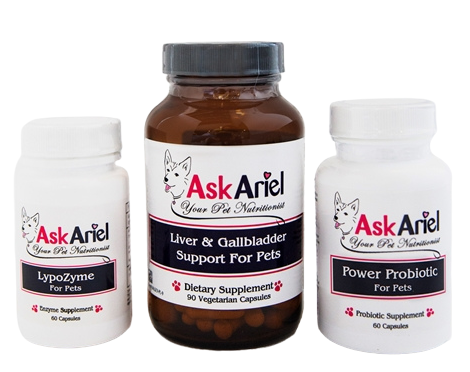
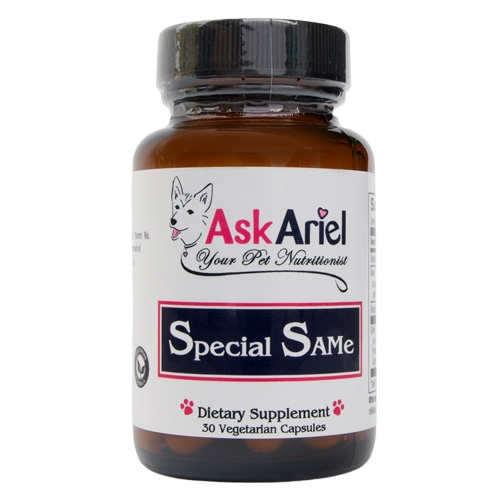
Many dogs with Cushing's will develop elevated liver enzymes or liver disease due to chronically increased cortisol levels. The most common elevated laboratory value in dogs with Cushing's is Alkaline Phosphatase (ALK Phos). Using natural liver support supplements, such as Ask Ariel's K9 Liver Support Kit and Special SAMe, can help to reduce stress on the liver and lower elevated liver enzymes.
K9 Liver Support Kit – Our trio of liver supplements have been quite effective in helping pets with elevated liver enzymes. The liver is the main "clearinghouse" for excess hormones. When used in combination with LypoZyme and Power Probiotic, Liver Support helps to flush out toxic overload. The excess cortisol is putting a lot of stress on your dog's body overall, so it is important to use these natural sweepers together to try to clean out the excess cortisol and reduce the workload on the liver and digestive tract.
Special SAMe – S-Adenosyl-L-Methionine (SAMe) is scientifically proven and widely prescribed by veterinarians for liver support and detoxification. It supplements metabolic activity, helping maintain glutathione levels (which is known to be protective and detoxifying for the liver). Promotes healthy liver function and cell regeneration.
Melatonin and lignans inhibit enzymes that are used in cortisol production. Research studies conducted at the University of Tennessee - Knoxville (UTK) concluded that melatonin can help reduce excessive cortisol levels. Lignans have also been studied for their role in blocking enzymes needed for cortisol production. UTK has found that the combination of lignans and melatonin works synergistically to reduce cortisol levels in dogs.
"Stevie is a mischievous but loving girl who is now almost 9 with her birthday coming up in April. When Stevie was almost 7 she was diagnosed with Cushing's Disease after showing signs for several months. Instead of resorting to the prescribed medications that had a high chance of causing her harm- I knew I wanted to go a more natural route. AskAriel provided so much care and support at a time where I was sad, scared, and lost as to what to do that was best for Stevie. After changing her diet to the recommendations made my AskAriel and implementing the supplements, we saw such a beautiful change in Stevie. Where she was suddenly lethargic, low energy, and just overall sad- we saw our spunky and sassy girl start to come back. It has been almost three years since her diagnosis and I'm so happy to say she is doing better than ever! Thank you AskAriel!"
Canine Cushing's disease is an endocrine disorder. The endocrine system is responsible for producing and secreting hormones, which are the body's chemical messengers. Cortisol is the "fight-or-flight" steroid hormone that regulates many processes, including metabolism, helping the body respond to stress and modulating the immune system.
Cushing's disease (hyperadrenocorticism) results when the body produces too much cortisol. It can weaken the immune system and cause pain and discomfort.
The three primary causes of Cushing's disease in dogs include a small pituitary tumor, an adrenal gland tumor or the long-term use of high-dose steroids. Almost 85% of Cushing's cases are pituitary-based, meaning that the pituitary is sending too many hormones to the adrenal glands, which causes them to overproduce cortisol. An adrenal tumor can trigger excess cortisol production in adrenal-dependent Cushing's disease.
As dogs get older, some may start developing signs of Canine Cushing's disease. While these slow and gradual changes that may seem like they are related to aging, they could be symptoms of Canine Cushing's disease (also known as Cushing’s syndrome in dogs).
The American Kennel Club reports that Cushing's disease is most prevalent in Poodles, Dachshunds, Boston terriers, Boxers, and Beagles, but it can occur in any breed. Many dogs with canine Cushing's have a history of allergies and many have taken steroids.
*Reference: Dr. Jeff Grognet. Cushing's Disease in Dogs. The American Kennel Club, Inc. October 5, 2016.
Many laboratory tests for Cushing's disease can be inconclusive and/or show abnormal liver values. You should always ask for copies of your pet's blood work. If values are within or close to normal range, they may not seem concerning. Repeated and progressive elevations in certain enzymes, like alkaline phosphatase (ALP), may be a clinical sign of Cushing's disease. Quite often there is NO definitive diagnosis, just subtle signs. Many dogs are diagnosed with "probable Cushing's" or pre-Cushing's syndrome.
"Max has been using the Canine Cushing's Support formula for 4 months with good results. Max's appetite has gone from voracious, always hungry to pretty normal. His thirst was almost unquenchable, drank so much water! We are so happy we found a remedy to help him with his Cushing's Disease."
Concerned pet owners might first notice that there are skin sores that keep recurring or that their dog's drinking and urination patterns have changed. Sometimes canine Cushing's disease symptoms in dogs are much more subtle, and in the early stages, pets may only display a few (if any) of the symptoms below:
Excess water consumption
Increased urination
Increased appetite
Panting
Bloated, pot-bellied abdomen
High blood pressure
Hair loss (usually symmetric)
Thinning of the skin and fur
Susceptibility to infections and diabetes
Weakening of muscles, exercise intolerance
Other common clinical signs are dilute urine, protein loss in the urine and high blood pressure. Some pet owners report that their cushing disease dog is licking because they are looking for food or they may have an upset stomach.
Dogs with Cushing's disease often exhibit excessive licking, which can be concerning for pet owners. This behavior is commonly associated with the discomfort and skin issues that arise from the hormonal imbalances caused by the disease.
Dogs with Cushing's disease often experience hair loss due to the overproduction of cortisol, a hormone that can disrupt the normal growth cycle of hair follicles. This hormonal imbalance leads to thinning hair, bald patches, and a dull coat, primarily affecting the dog's sides, back, and tail.
Cushing's disease in dogs can significantly impact a dog's back legs. The condition leads to the overproduction of cortisol, which can cause muscle weakness and atrophy, affecting mobility and overall quality of life.
Cushing's syndrome in dogs, also known as hyperadrenocorticism, progresses through several stages that are important for diagnosis, treatment, and management.
Early Stage (Subclinical): Subtle signs may appear, but symptoms can be difficult to detect.
Clinical Stage (Mild to Moderate): Pot-bellied appearance, hair loss, thinning skin, increased appetite, lethargy.
Advanced Stage (Severe): Persistent infections, diabetes, high blood pressure, liver enlargement.
End-Stage: Severe complications; care often focuses on comfort and quality of life.
Early detection and treatment can help slow progression, improve quality of life, and reduce the risk of severe complications.
The prognosis for dogs with Cushing's disease depends on factors such as the timeliness of diagnosis, the underlying cause, and the response to treatment. With appropriate care, many dogs can lead a good quality of life.
Ongoing monitoring and adjustments to the treatment plan are often needed to adapt to changes in the dog's condition.
"Ivy Mae Marie is 13 years old, and for a long time she struggled with untreated Cushing’s disease. It weakened her body and caused severe GI issues, most foods and supplements just made her sick. On top of that, the Cushing's disease caused constant acid reflux, nausea, and scary choking episodes from esophageal issues.
Finding Ask Ariel changed everything for Ivy. Before we discovered their products, I was heartbroken and torn about whether I should put her down just to end her misery, because nothing was helping and I couldn’t stand to see her suffer, especially in her older, more vulnerable years. Their products, especially the Cushing’s Disease supplement, finally gave her the support she so badly needed. The Ask Ariel team is always quick to respond and even helped me get the dosages just right for my girl. For the first time, something actually worked, and Ivy was able to start enjoying her senior years instead of struggling through them. Her pot belly went away, the reflux and those terrifying choking episodes at night stopped, and she could finally sleep peacefully.
Ask Ariel products gave me more time with my girl, time I didn’t think we had left. Watching her enjoy her golden years with comfort and dignity is the greatest gift I could have asked for. From the bottom of my heart, thank you for saving Ivy… and for healing mine. We love you!"
The supplements that were life-changing for Ivy have been: Canine Cushing's Support, Special SAMe, LypoZyme, Power Probiotic, Soothing Digestive Relief, Liver Support and ArthroStride
Many dogs with Cushing's Disease have a long history of allergies and/or steroid use. They also frequently have elevated liver enzymes, making it important not to overload the liver with excessive protein and fat. By feeding a low-fat, hypoallergenic novel protein diet and using home remedies for Cushing's Disease, many pet owners see a significant improvement in their dog's symptoms. When ordering supplements, please be sure to include the food you are feeding your pet along with health issues directly on the order form at checkout. We will include FREE diet suggestions on the packing slip that comes with your order.
Susan Blake Davis, CCN, is a Pet Nutritionist and founder of Ask Ariel, providing veterinarian recommended, human-grade supplements for dogs and cats for over 20 years. Susan developed these supplements after years of working in animal rescue, helping thousands of shelter pets regain their health through holistic nutrition and care.
From 2005 to 2015, she offered holistic pet nutrition consultations at VCA Hospitals and a veterinary oncology center, working alongside Dr. David Gordon, a respected integrative veterinarian in Southern California. Over the years, veterinarians nationwide have recommended Ask Ariel supplements after seeing firsthand the proven results in their patients.
A Phi Beta Kappa graduate of UC Davis with a Master’s from UCLA and certification as a Clinical Nutritionist, Susan’s expertise has been featured in Catster, Dogster, The Los Angeles Times, and the Orange County Register.
Early symptoms of Cushing’s disease in dogs are increased thirst and increased urination. The most distinguishing symptom of Cushing’s is a pot bellied appearance. Cushing’s generally affects middle aged and older dogs, so many owners will contribute some of the signs to normal aging. Cushingoid dogs may also have excessive panting, reduced activity, increased appetite, hair loss and recurrent skin infections.
Natural remedies can help to slow the progression of Cushing’s disease. It is a progressive endocrine disorder where the dog’s body produces too much cortisol, otherwise known as the fight or flight hormone. Phosphatidylserine has been scientifically shown to reduce cortisol levels. Canine Cushing’s Support is a natural supplement containing Phosphatidyl Serine to help reduce symptoms of Cushing’s, such as panting, excess water consumption, weakened immune response and a pot-bellied appearance. In the beginning stages of canine Cushing’s, many dogs respond very well to natural remedies and may not need to be on prescription medications.
Laboratory testing for Cushing’s disease can show abnormal liver values for certain enzymes. Most dogs with Cushing’s will have increased ALP, alkaline phosphatase. Since the liver is responsible for filtering toxins out of the body, it is important to help reduce the workload on the liver. Prescription medications for Cushing’s disease in dogs can put further stress on the liver. Special SAMe helps to reduce elevated liver enzymes and supports liver health. S-adenosyl-L-methionine is backed by extensive scientific research and is widely recommended by veterinarians because it is safe and effective.
Dogs with allergies or hormonal conditions, like Cushing’s, are more likely to exhibit skin odors and have oily skin. Oily skin can be a breeding ground for yeast and other bacteria, resulting in a stinky cheese smell. This yeast overgrowth can make your dog uncomfortable and cause excessive licking and scratching, blackened skin under the armpits or belly and doggie odor. With Cushing’s disease a dog’s skin and fur can thin out and they can are more susceptible to skin infections.
There can be many reasons that your dog is panting and gaining weight. As dogs age, they often put on a little extra weight due to a decreased activity level. The extra weight can make breathing more laborious which results in panting. Canine Cushing's disease is an endocrine disorder that can cause increased water drinking, frequent urination, a pot belly dog, thinning skin and hair loss. While some of the symptoms may seem like they are related to aging, these slow and gradual changes may also be a sign of Cushing’s syndrome in dogs.
Cushing syndrome or hyperadrenocorticism is an endocrine disorder characterized by the overproduction of cortisol, the stress hormone. Cushing’s disease is caused by 1. a tumor on the pituitary gland or 2. a tumor on the adrenal gland or 3. as a result of long-term steroid use. Dogs with Cushing syndrome develop a pot-bellied appearance, excessive thirst and increased hunger. They will require lifelong management of the condition to regulate the hormone levels and control secondary problems, like skin conditions and weight gain.
Canine Cushing's disease can be hard to diagnose and many older pets can display symptoms. Dogs may be in different stages of the disease and may also have different hormones elevated. Some dogs may be definitively diagnosed as Cushing's, some may be probable Cushings (e.g. they have the symptoms but the tests aren’t conclusive) and some may have Atypical Cushings (where cortisol may be normal but steroid precursors (e.g. sex hormones) may be elevated.
Veterinary endocrinologists at the University of Tennessee in Knoxville (UTK) have a laboratory test that not only measures a dog’s cortisol levels but also tests a variety of steroid intermediate hormones (also called “sex steroids”) including androstenedione, estradiol, progesterone and aldosterone.